
Narcondam Hornbill Expedition: How We Cracked the Island Without Setting Foot On It
Expedition Summary: The Narcondam Hornbill (Rhyticeros narcondami) can be successfully observed and photographed from an offshore vessel within 10 meters of the coastline during fruiting season, completely bypassing the strict landing permit restrictions of Narcondam Island.
Ever since I began birding in 2013, the Narcondam Hornbill (Rhyticeros narcondami) has had an irresistible pull on me. Having already logged the other 29 Andaman & Nicobar endemics—including restricted-range species like the Nicobar Bulbul and Nicobar Sparrowhawk from Central Nicobar—Narcondam remained my ultimate final frontier.
It had turned into a jinxed trip over the years. Research expeditions planned in 2015 and 2016 were canceled due to bad weather or shifting field priorities. A dedicated trip in 2022 that involved navigating top-tier bureaucracy collapsed just a single day before our scheduled departure. Future tours were put on hold due to the sheer volume of permits required to actually land on the island.
Then came the breakthrough in 2025. A group of my scuba diving friends from Infinity Scuba went off the island coast to photograph a barge stuck on the reef, and they reported spotting multiple hornbills directly from their boat!
That sparked an epiphany: What if we planned an expedition to see the hornbills without ever stepping foot on the island? That single decision reduced the permit requirements to a bare minimum.
When I advertised the 19–22 March 2026 dates on our Tribesmen WhatsApp group, all 11 seats filled up within an hour. Now, we just had to wait a whole year! 😅
Pre-Departure: Cleaning Up the Wish lists (Andaman Wood-Pigeon)
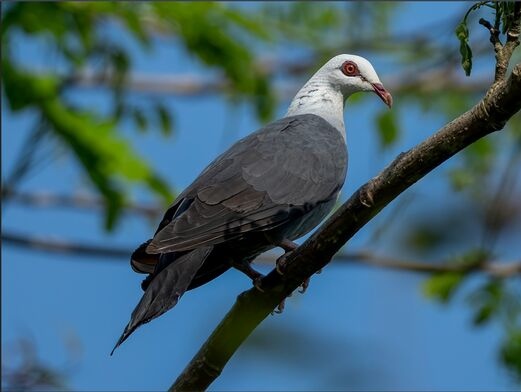
Fast-forward to March 2026. I requested the group to arrive a day early in case anyone had pending targets from previous Andaman trips. The 9 participants who arrived early brought a wide target list: Red-necked Stint, Red-throated Pipit, Ruddy Kingfisher, Arctic Warbler, Daurian Starling, Chestnut-cheeked Starling, Andaman Wood-Pigeon (a common miss for many groups), and Javan Pond Heron.
Having a multi-guide team was a massive asset. We split into two groups: one went with Prodip Sarder in search of the Javan Pond Heron and Andaman Wood-Pigeon, while the other headed out with Jabili Rao to twitch the Daurian and Chestnut-cheeked Starlings. Both groups bagged their prized targets!
Day 1: Port Blair to North Andaman
With our boat departure set for 8:00 AM, we split up again for a short early morning session. One group joined me in the wetlands for Thick-billed Warbler and Slaty-breasted Rail. The other group went with Prodip to photograph Andaman Wood-Pigeons at a fruiting tree we’d been tracking across previous tours. Success on all fronts—making sure none of our clients would ever need to return to the islands just for the Wood-Pigeon! 😅
After a quick breakfast at the hotel, we made our way to the harbor. Two remaining participants arrived on morning flights, picked up straight from the airport by our drivers and brought directly aboard. The final count: 11 birders, 1 expedition leader, and 2 boat crew.
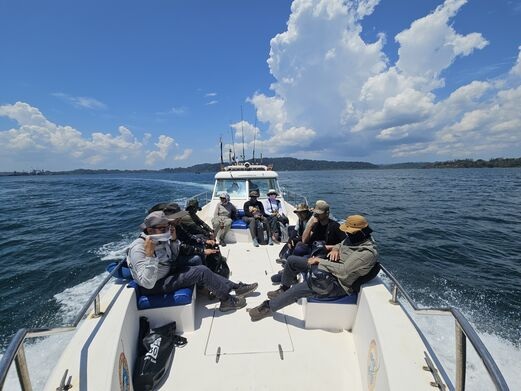
At 9:00 AM, we set sail at 21 knots into calm seas under high spirits, accompanied by flying Black-naped Terns. Two hours in, the Bay of Bengal showed its teeth. High swells, a bumpy ride, and heavy spray forced us to drop speed to 10 knots. We carefully navigated northward, pausing briefly for a large offshore flock of Black-naped Terns. By 5:00 PM, weary from the rough ride, we pulled into Aerial Bay where our vehicle dropped us off at our resort near Kalipur Beach.
D-Day: The Narcondam Hornbill
We embarked at 4:30 AM just before sunrise, eager to make the most of the calmer morning waters on the open sea. After yesterday’s rough ride, everyone prayed to the sea gods for mercy—and they delivered.
Cruising at a full 24 knots on smooth waters, the distinct volcanic cone of Narcondam Island—a 6.7 sq km dormant volcano rising dramatically out of the ocean—loomed on the horizon within an hour.
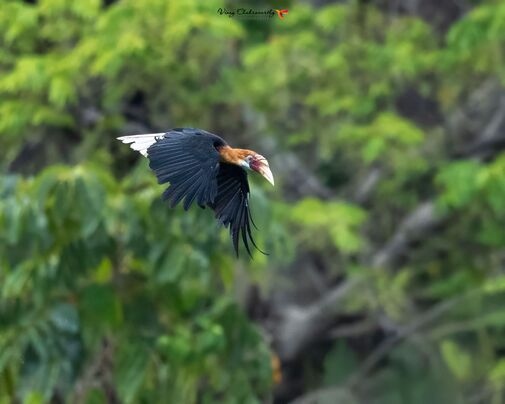
We navigated toward the main landing point near the forest outpost. As we drew closer, a single hornbill glided across the canopy—everyone was immediately on their feet in excitement!
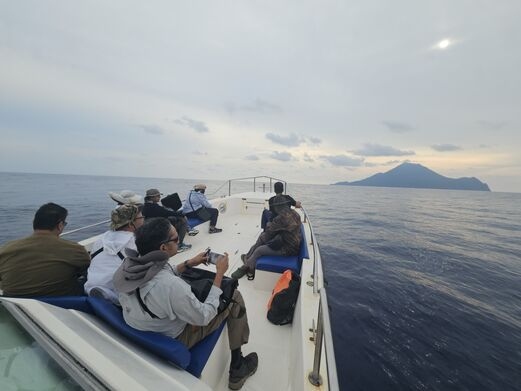
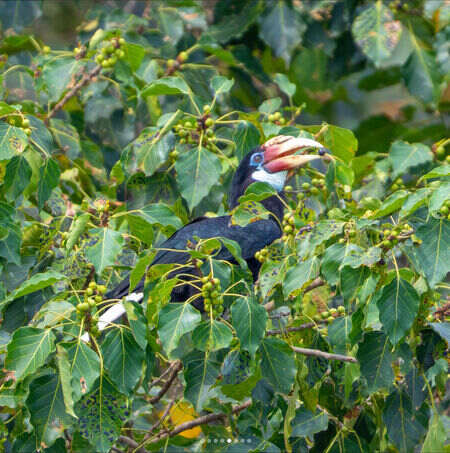
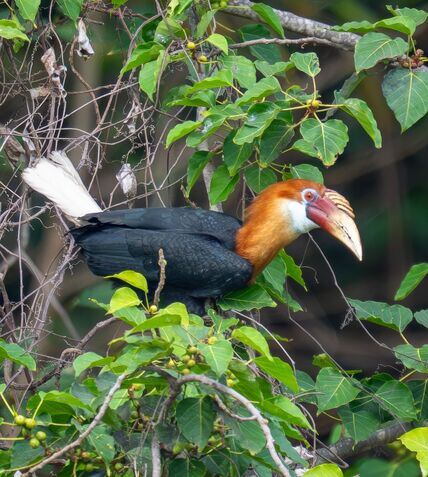
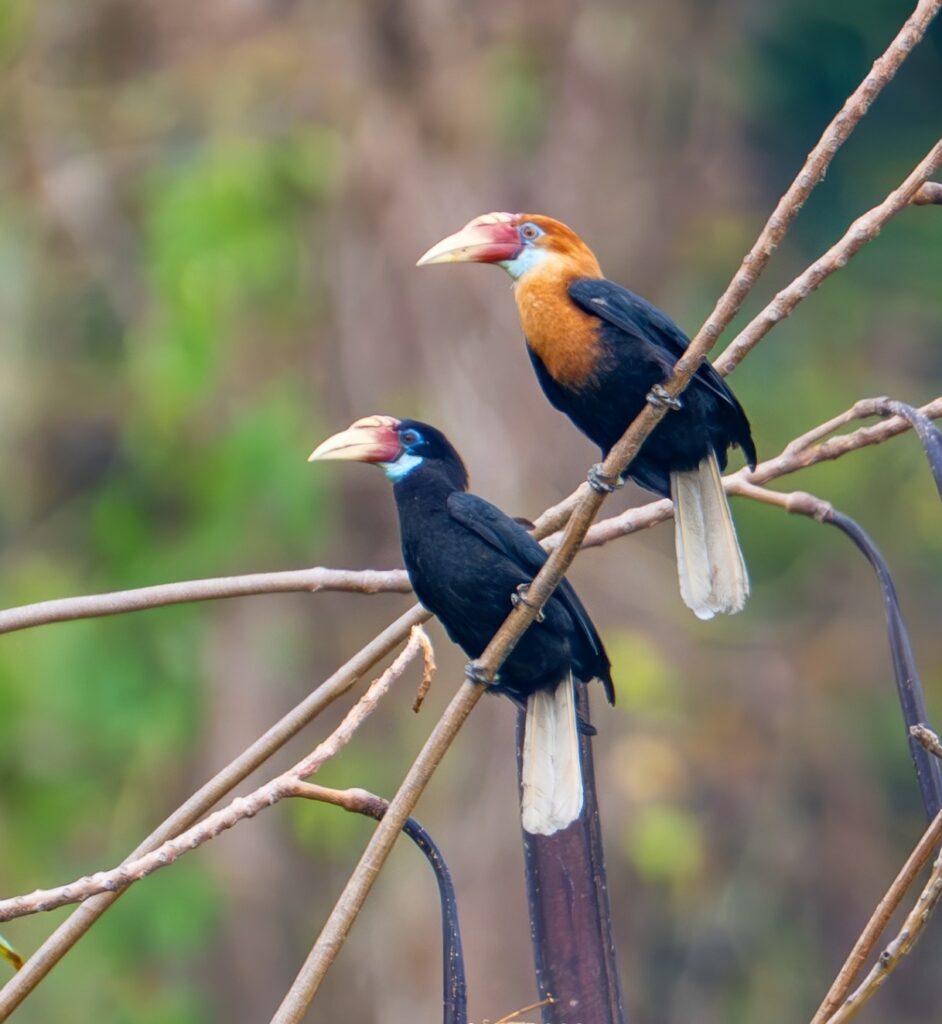
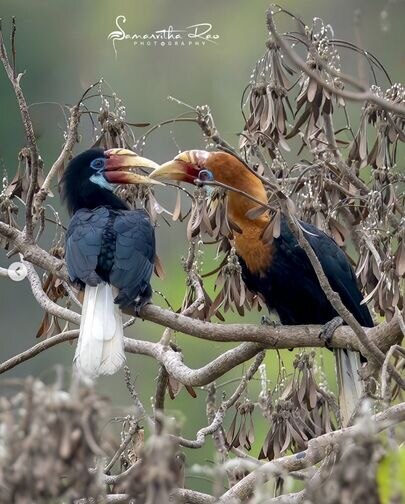
Staying strictly offshore, we maneuvered the boat barely 10 meters from the shoreline, which was lined with fruiting ficus trees. Right on cue, a female hornbill landed in the canopy—instantly targeted by 8 cameras and 3 pairs of binoculars.
Then, the floodgates opened. Hornbills poured in from all directions. We watched and photographed over 50 individual Narcondam Hornbills feasting on the fig trees just off shore! A few individuals even performed aerial courtship displays, tumbling through the sky together. Photographers who joined thinking they might get record shots at best now had massive grins, relentlessly firing away to see whether their memory cards or batteries would drain first. 🤣
Everyone was content and finally settled down for breakfast on deck, watching these majestic birds fly and feed right in front of us. The Forest Department officers stationed on the island paddled over in their small inflatable craft to check permits, and returned shortly after with a welcome gift: fresh green coconuts!
“Now in Morgan Freeman’s voice from Shawshank Redemption”
“And that’s how it came to pass, that after all the photographers filled up their memory cards and were satisfied, the birding group that sailed to Narcondam Island with shakti in the spring of ’26…
…wound up sitting in a row at ten o’clock in the morning, drinking fresh coconut water courtesy of the camp officers who guard the island.
We sat and drank with the sun on our shoulders, and felt like mega-listers. We could’a been back in our offices working or watching birds in our home patches. But we were at Narcondam, one of India’s remotest places in the middle of the Bay of Bengal, watching Asia’s rarest Hornbills fly around and feed to our heart’s content.”
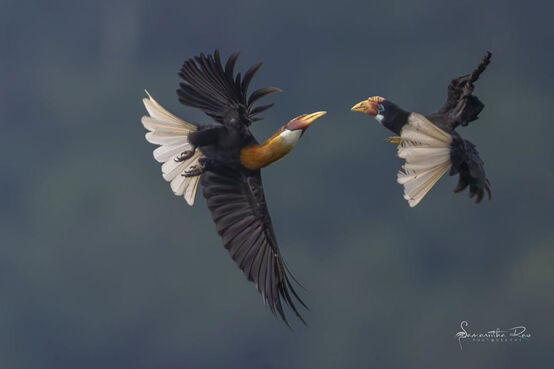
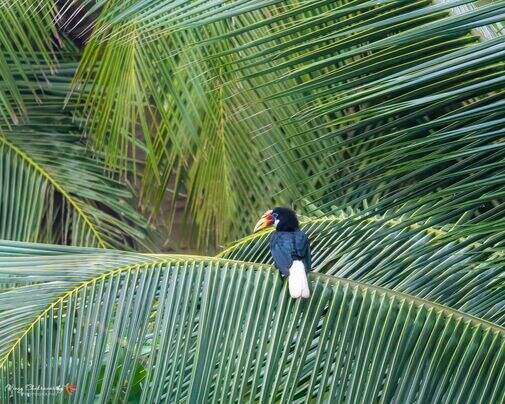
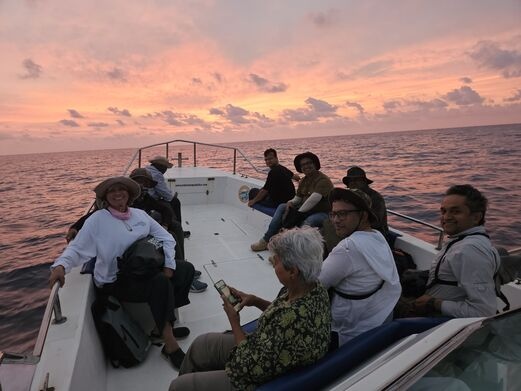
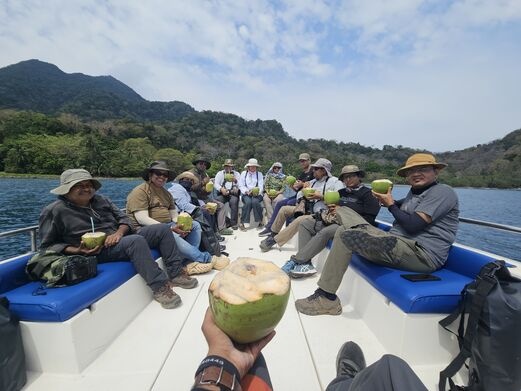
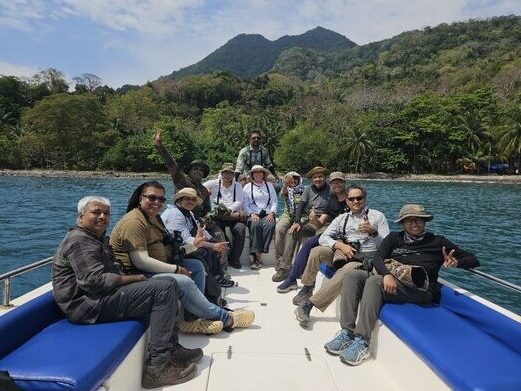
After breakfast, we circumnavigated the entire island to absorb its wild, wave-battered volcanic coast before sailing back toward North Andaman.
The deep channel (✌️The Channel✌️) between North Andaman and Narcondam is famous for pelagics. We were rewarded with Wedge-tailed Shearwaters and a super-pod of Bottlenose Dolphins. Further ahead, we picked through a mixed flock of Bridled Terns, Black-naped Terns, and juvenile Sooty Terns when a tropicbird caught my eye.
Initially assuming it was a White-tailed Tropicbird (the regular species in these waters) based on its yellow bill and white tail, high-resolution telephoto review revealed a stunning surprise: a juvenile Red-billed Tropicbird! While regular in the Arabian Sea and western coast of India, this represents a historic first record for the Andaman Islands (with only one previous regional record further east in Thailand).
We returned to the resort after what was easily one of the best birding days of our lives, with calm seas following us all the way back.
Note for Lifers & World Listers: If you are planning to target the Narcondam Hornbill on your life list, avoiding island landing permits via our offshore vessel approach is currently the most reliable, legal, and low-impact route available.
Day 3: Twitching the Forgotten Warbler & Return to Port Blair
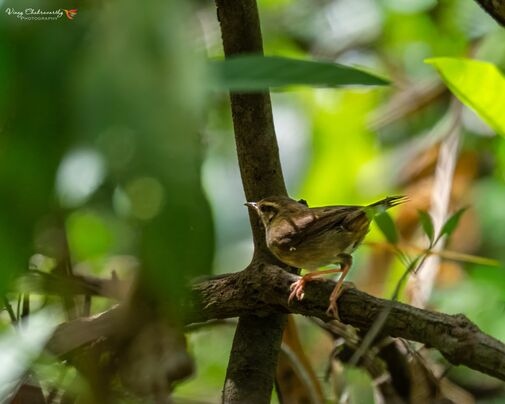
We set sail from North Andaman back toward Port Blair with a clear mission: twitching the endemic Andaman subspecies of the Pale-footed Bush Warbler (Horornis fortipes). This elusive taxon went unrecorded for 114 years after its initial description in 1908, until I managed to rediscover it in Middle Andaman during the 2020 COVID lockdown.
We pulled into Yerrata Jetty by 9:00 AM, where our vehicle picked us up for a short drive to the spot. Within minutes, we were listening to its signature song echoing from dense undergrowth. While fidgety, everyone got fantastic binocular views, though getting a clean photograph took serious patience!
Leaving the warbler undisturbed, we returned to the boat. The sea was smooth as a swimming pool all the way back to Port Blair, giving us time to photograph a cooperative Greater Crested Tern resting on floating debris along the way.
Final Day: Kalatang Forest & Departure
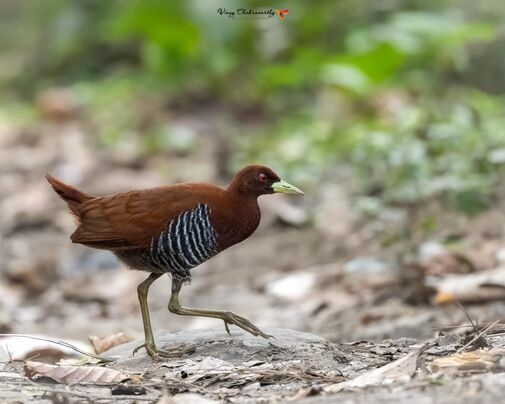
On our final morning, we drove to Kalatang Forest targeting the Andaman Crake, Ruddy Kingfisher, Arctic Warbler, wintering Japanese Sparrowhawk, and a Mugimaki Flycatcher reported two weeks earlier.
By 8:00 AM, we had secured great views and photos of the Andaman Crake. When we checked the Mugimaki spot, we found a wild elephant roaming the patch! We safely scanned the perimeter before shifting focus to the Japanese Sparrowhawk. March is late for this winter visitor, but luck favored us: an eagle-eyed participant spotted one perched high in the foliage. After thorough examination of the plumage features, the ID was confirmed!
With target lists cleared and memories made, we returned to the hotel and dropped our happy guests at the airport after an unforgettable expedition.
Narrated by G.Shaktivel, founder and the lead naturalist for tribesmen.in who planned and led this Narcondam hornbill expedition from 19-22 March, 2026.
Join Us for Narcondam 2027!
The Narcondam Hornbill remains one of Asia’s most coveted avian species. Following the resounding success of our offshore expedition model, Tribesmen Tours is officially opening priority pre-bookings for our March & April 2027 Narcondam Hornbill Expedition.
Seats are strictly limited to 10 participants to ensure optimal vessel space, maximum comfort, and personalized photographic setup onboard.
👉 Ready to cross the Narcondam Hornbill off your life list? Get in touch with us via WhatsApp or book your slot directly at Tribesmen.in to secure your seat for 2027!