
Little Andaman Birding Tour: 8-Day South & Little Andaman Expedition
Birdwatching in Little Andaman – Tour Overview
“The Little Andaman Birding Tour by Tribesmen is an 8-day guided birding tour targeting 20+ Andaman endemic bird species. The itinerary spans South Andaman (Chidiyatapu, Kalatang, Ferrargunj, Sippighat) and Little Andaman (Hut Bay, Butler Bay) to view flagship species including the Nicobar Pigeon (Caloenas nicobarica), Andaman Masked Owl (Tyto deroepstorffi), and Beach Thick-knee led by local birding guides G.Shaktivel, Prodip Sarder and Jabili Rao
> Field Note: Our day-by-day routing dynamically adapts to local ship schedules to maximize 2–3 full days of targeted birding on Little Andaman. the ship journey time to Little Andaman is 8 hours.
Day 1: Arrival : Immediate Lifers & Night Birding in Andaman
No wasted travel days. After a seamless airport pickup, we bypass the midday heat, have an early lunch and head straight to our first birding stop at Sippighat wetlands just as the afternoon activity peaks to photograph the Andaman Teals (Anas albogularis). Following our Wetland session, we drive further to Ferrargunj Forest for Night Birding to track down the Andaman Scops Owl (Otus balli), Andaman Hawk-Owl (Ninox affinis) & Hume’s Hawk Owl before returning to the resort for dinner.
Key Highlights:
- Wetland Birds: Andaman Teal, Plume-toed Swiftlet, Edible-nest Swiftlet, Pin-tailed Snipe, Stork-billed Kingfisher, Yellow Bittern, Long-toed Stint, Long-toed Stint, Red-necked Stint, Eastern Yellow Wagtail, Curlew Sandpiper, Pacific Golden Plover.
- Owls: Andaman Scops-Owl, Hume’s Hawk-Owl, Andaman Hawk-Owl.
Day 2: Birding in Andaman: Target Endemic Bird Species
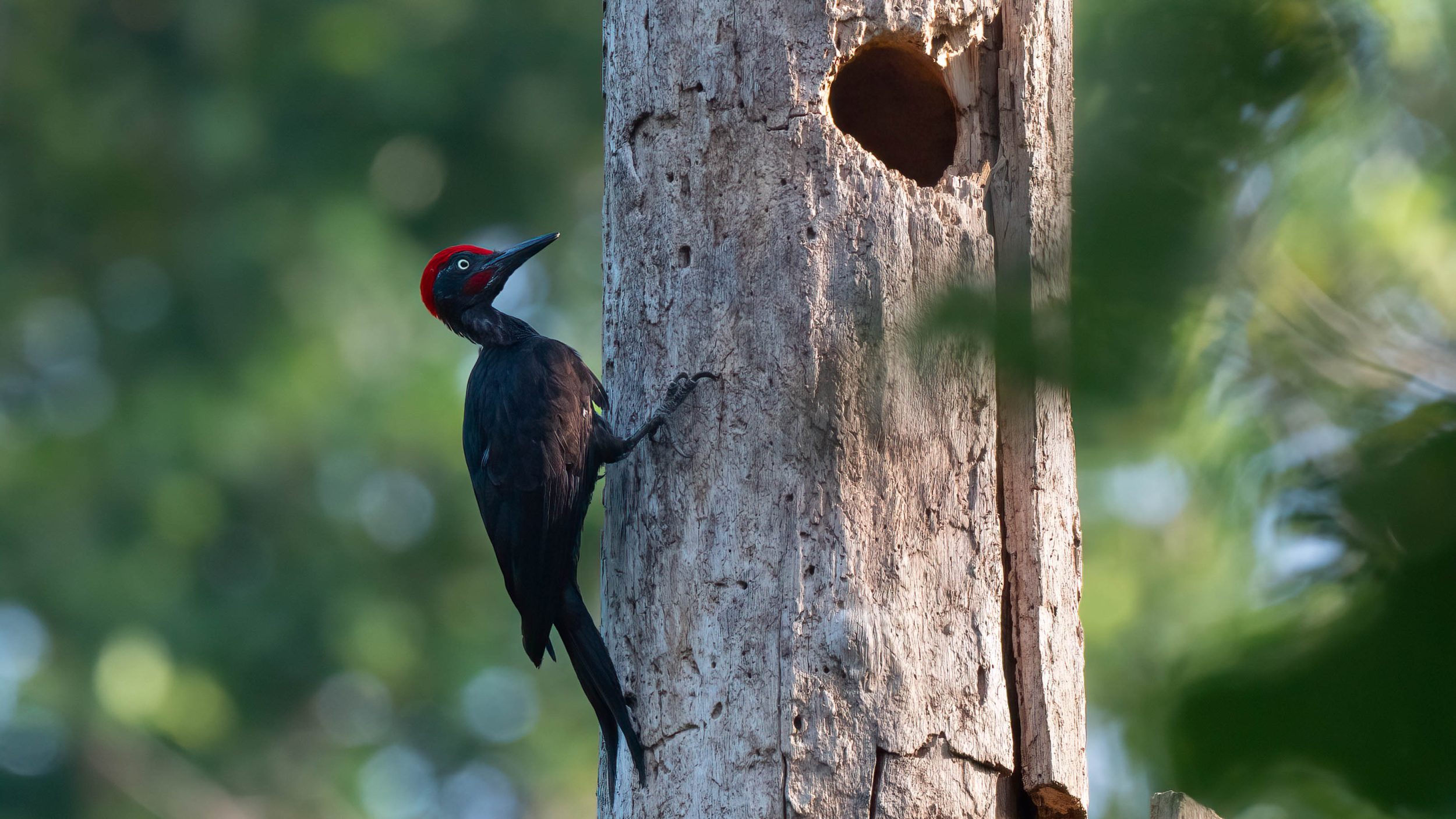
We kick off with a pre-dawn start (5.15am) to drive to one of the premium birding hotspots in Andaman “Kalatang Forest” which sits at the base of the Mt. Harriet National Park range. The journey takes roughly an hour. Upon arrival, we walk the forest tracks just as morning bird activity peaks. Specifically, we target canopy species like the localized Andaman Cuckoo-shrike, Andaman Cuckoo-dove, and Andaman Woodpecker. Meanwhile, nearby mangroves provide prime opportunities to spot the Ruddy Kingfisher. Afterward, we return to the resort to rest and recharge. Later, our afternoon excursion to Chidiyatapu focuses on ticking off the Andaman Serpent-Eagle (Spilornis elgini) and the elusive Andaman Wood-pigeon. Finally, we conclude the day with an exciting night session seeking the endemic Andaman Nightjar (Caprimulgus andamanicus)
Key Highlights:
- Endemics: Andaman Cuckoo-shrike, Andaman Cuckoo-dove, Andaman Drongo, Andaman Bulbul, Andaman Flowerpecker, Andaman Green-pigeon, White-headed Starling, Andaman Woodpecker, Andaman Treepie, Andaman Serpent-Eagle, Andaman Coucal.
- Migrant & Residents: Ruddy Kingfisher, Collared Kingfisher, Ornate Sunbird, Oriental Cuckooshrike, Pacific Reef-Egret, Freckle-breasted Woodpecker, Arctic Warbler, Long-tailed Parakeet, Dollarbird.
- Nocturnals: Andaman Nightjar, Oriental Scops Owl (Waldens)

Day 3: Pelagic Transit to Little Andaman & Nocturnal Endemic Quest
Board an 8-hour inter-island vessel crossing to Little Andaman, turning the voyage into an active pelagic seawatch. From the deck, scan open waters for oceanic targets, including Black-naped Tern (Sterna sumatrana) and Bridled Tern (Onychoprion anaethetus).
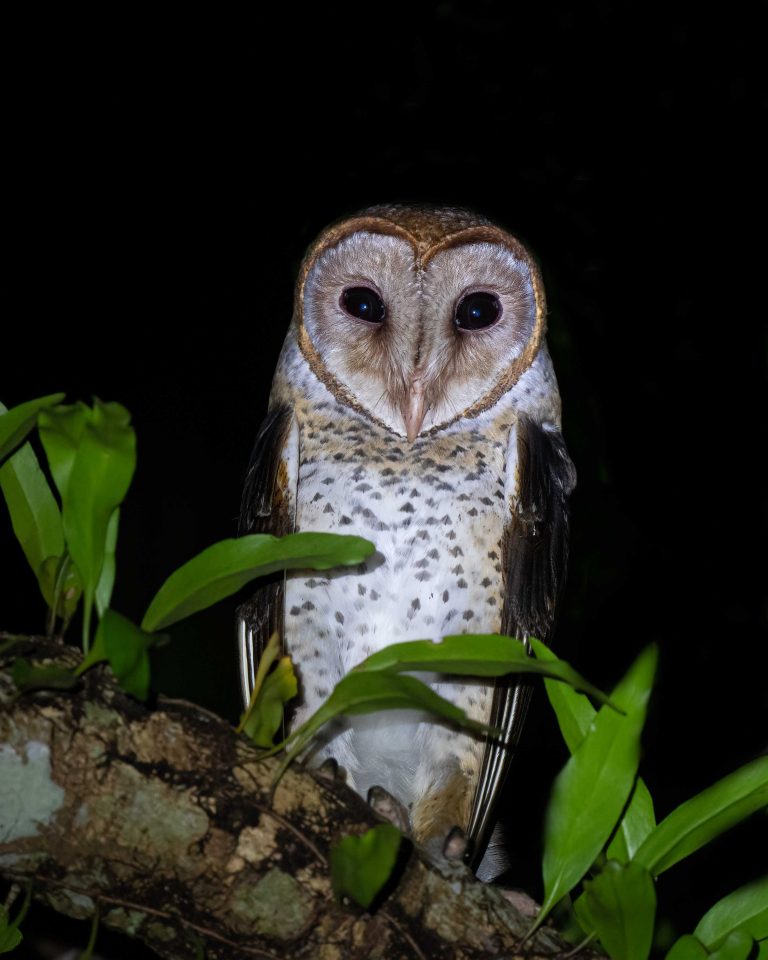
Upon arrival at Hut Bay, we execute a rapid luggage drop-off to maximize daylight field time. We immediately hit the road, birding the forest edges of Hut Bay. Post-sunset, the session transitions into a targeted night hunt for high-priority endemic nocturnal species, specifically seeking out the elusive Andaman Masked Owl (Tyto deroepstorffi) and Andaman Scops Owl (Otus balli).
Key Highlights:
- Endemics: Andaman Drongo, Andaman Bulbul, Andaman Flowerpecker, Andaman Green-pigeon, White-headed Starling, Andaman Coucal.
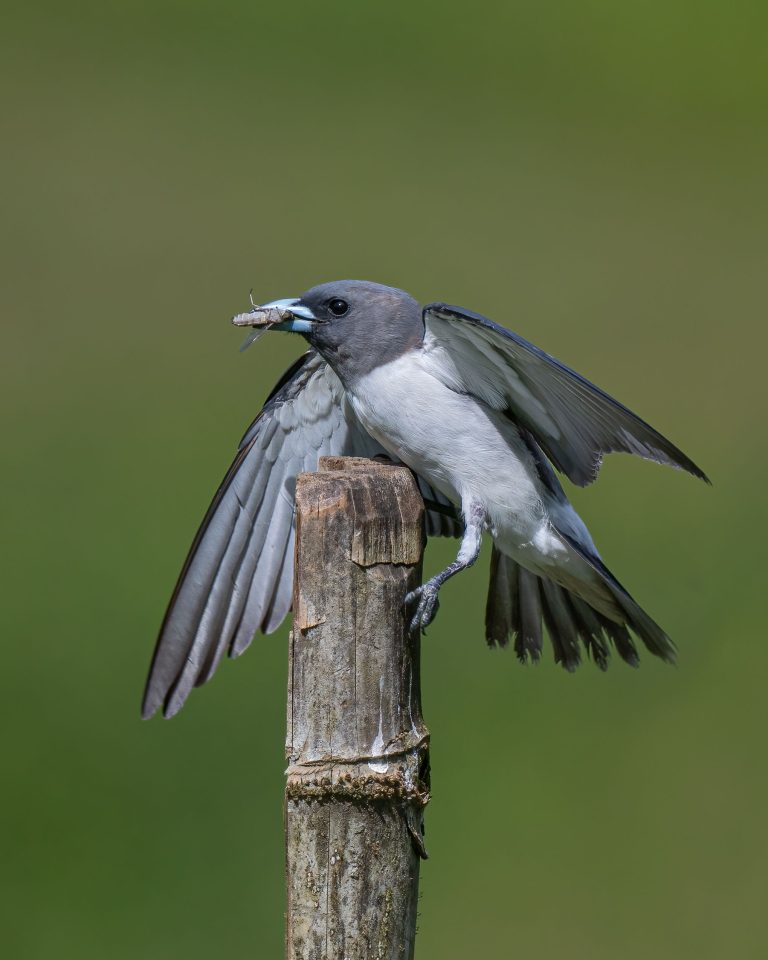
- Migrant & Residents: Collared Kingfisher, Ornate Sunbird, Pacific Reef-Egret, Pacific Swallow, White-breasted Wood swallow, Black-naped Tern, Pacific Golden Plover.
- Nocturnals: Andaman Masked Owl, Andaman Scops Owl.
Days 4–5: Little Andaman Birding Trails: Targeting Nicobar Pigeon & Coastal Species
Spend two full days systematically birding the most productive habitat zones across Little Andaman. Morning sessions center on a focused 3 km trail walk through pristine coastal forest, to track down the highly sought-after Nicobar Pigeon (Caloenas nicobarica). This coastal canopy supports a healthy population of Andaman Woodpecker (Dryocopus hodgei), Andaman Cuckoo-Dove (Macropygia macrura), while also offering a realistic chance for the elusive Andaman Wood Pigeon (Columba palumboides).
Later, In the afternoons, birding transition to coastal, freshwater, and intertidal hotspots including Lotus Point, White-surf Waterfalls, RK Pur, and Butler Bay Beach. Here, we meticulously scan the open shorelines and tidal stretches for the prized Beach Thick-knee (Esacus magnirostris). Both days conclude with post-sunset night birding to mop up any remaining target nocturnal species.
Key Highlights:
- Endemics: Andaman Woodpecker, Andaman Shama, Andaman Drongo, Andaman Bulbul, Andaman Flowerpecker, Andaman Green-pigeon, Andaman Cuckoo-dove, Andaman Coucal.
- Residents: Nicobar Pigeon, Beach Thick-Knee, White-breasted Wood-swallow, Violet Cuckoo, Plume-toed Swiftlet.

Day 6: Hut Bay Target Clean-up & Chatham Island Evening Roost
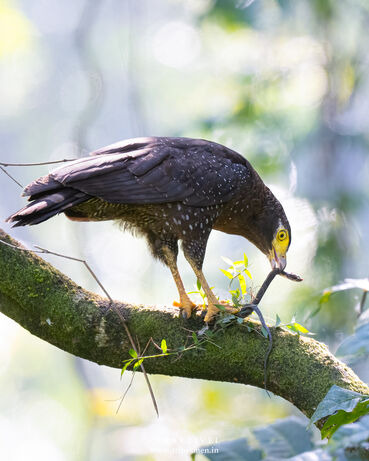
Begin our final morning on Little Andaman with a systematic birding session around the coastal, wetland, and open habitats of Hut Bay to target Andaman Serpent Eagle (Spilornis elgini) and reed warblers at Lotus Point.
After concluding the field session, return to the hotel for checkout and board the afternoon inter-island ferry back to Port Blair. Upon arrival, if time and light permit, we will make a swift run to Chatham Island to track down the localized Pied Imperial Pigeon (Ducula bicolor).
Day 7: Birding in Andaman: Target Clean-up
We dedicate this morning and evening to any missed targets from your checklist. Whether you need a crisp photograph of any species or are still hunting any endemic, our guide customizes this session to circle back to any key habitat if a specific target eluded us earlier in the week
Day 8: Departure
After breakfast at the hotel, our driver will drop you off at the airport for your flight back to mainland India, concluding your successful Andaman birdwatching tour.
Please note, no birding sessions are scheduled or included for this final day. However, if you have a late afternoon flight, you can optionally add a half-day birding or sightseeing tour for an extra charge.
Little Andaman Birding Tour Logistics: Ferries, Permits & Equipment
Trip Activity Level: Moderate (Grade 2.5 / 5)
Designed for active birders comfortable with slow-paced walking on unpaved ground, warm tropical humidity, and basic island infrastructure.
Trail Walking Pace: Field sessions include a 3 km morning forest trail on Little Andaman. The trail is mostly flat, and our walking pace is very slow (under 1.5 km/h) with frequent stops for scanning and photography. You should be comfortable being on your feet for 3–4 hours in warm, humid conditions.
The 8-Hour Ferry Crossing: Traveling to Little Andaman requires an 8-hour inter-island ship journey. Seating is indoors and air-conditioned, but open-sea swells can occur. We recommend bringing motion sickness medication if you are sensitive to sea travel.
Rustic Island Accommodation: Little Andaman is an undeveloped, pristine island. Hotel facilities in Hut Bay are basic, clean, and functional (standard AC rooms with private bathrooms), but they do not match mainland luxury resorts.
Pacing & Rest: To balance early morning dawn outings and evening owl sessions, we build in 3-hour midday rest breaks during the hottest hours when birds are quiet.
Frequently Asked Questions
What makes Little Andaman a must-visit location for serious birders?
While the Great Andaman chain shares much of the regional avifauna, Little Andaman is a remote oceanic island with vast stretches of undisturbed rainforest. It is one of the premier locations to reliably target the Nicobar Pigeon, alongside other high-priority Andaman endemics like the Andaman Masked Owl and Andaman Crake.
What is the best season for birdwatching in Andaman and Little Andaman?
The optimal window for Little Andaman birding is during the dry season from November through April. During these months, weather conditions are favorable for forest trail walks and sea crossings, resident endemics are actively vocal, and wintering migratory waders populate the coastal wetlands.
Do foreign or Indian birders need special permits to visit?
Restricted Area Permits (RAP) are no longer required for foreign nationals visiting major inhabited islands, including South Andaman and Hut Bay. However, certain interior tribal reserves remain strictly off-limits. Our routes operate exclusively within permitted public forest trails and hotspots.
How do unpredictable ferry schedules affect the trip itinerary?
Inter-island ferry schedules are published only 7 to 10 days prior to departure. To ensure a seamless expedition, our 8-day itinerary is dynamically structured. Our field team adjusts daily birding sessions on the ground to guarantee 2 to 3 full days of targeted fieldwork on Little Andaman without sacrificing core South Andaman targets.
What physical fitness level is required for this birding tour?
This expedition is rated Moderate and is well-suited for active senior birders. Morning sessions include up to a 3 km coastal forest trail walk at a slow pace with frequent stops. Guests should be prepared for tropical heat, humidity, unpaved terrain, and an 8-hour open-sea ferry crossing.
Which nocturnal endemic species can we target on this tour?
Night birding is a core focus. Across South and Little Andaman, we conduct dedicated post-sunset sessions targeting five key nocturnal endemics:
- Andaman Masked Owl (Tyto deroepstorffi)
- Andaman Scops Owl (Otus balli)
- Andaman Boobook (Ninox affinis)
- Andaman Nightjar (Caprimulgus andamanicus)
- Hume's Boobook (Ninox obscura)