
Andaman & Nicobar Birdwatching Itineraries & Species Guide
Welcome to the definitive resource for Andaman and Nicobar birdwatching itineraries, regional target guides, and endemic species checklists. Home to 30 IOC-recognized endemic species and over 100 endemic subspecies, this isolated archipelago represents one of Asia’s most sought-after avian frontiers.
Whether you are targeting the elusive Andaman Crake around Port Blair, scouting coastal scrub for the Nicobar Megapode, or tracking canopy endemics in Little Andaman, our detailed trip guides provide the essential field breakdowns needed to plan a high-yield expedition.
If you are looking to arrange private multi-day trips or custom departures, explore our main portal for elite Andaman birding tours, or check our fixed-departure to join an upcoming group expeditions.
Our multi-day Andaman Birdwatching Itineraries
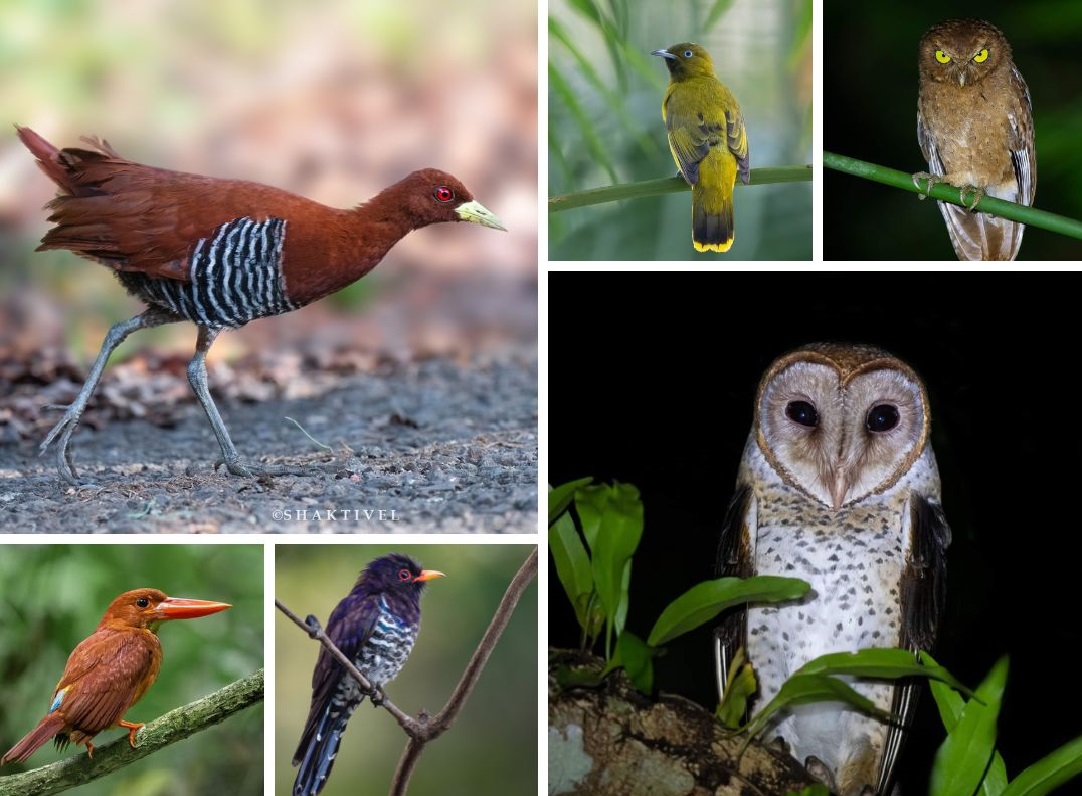
- ⏱️ Duration: 6 Days / 5 Nights
- 📍 Base: Port Blair
- 🎯 Target: 20 Endemics, Residents & Migrants
- 🗓️ Upcoming Tours: Andaman Birding Group Tour Calendar(2026-2027).
5-Day South Andaman Endemic Birding Itinerary
Designed for birders and wildlife photographers on a focused timeframe, this 6-day itinerary centers around Port Blair to unlock South Andaman’s richest evergreen forests, coastal mangroves, and freshwater wetlands. By utilizing short driving transits, we maximize field hours during critical dawn and dusk activity windows.
This expedition targets high-priority island endemics and nocturnal species across prime birding habitats including Chidiyatapu, Kalatang, Ferrargunj, and Sippighat
Key Target Species: Andaman Crake (Rallina canningi), Andaman Wood-Pigeon (Columba palumboides), Andaman Woodpecker (Dryocopus hodgei), Andaman Boobook (Ninox affinis), Andaman Serpent-Eagle (Spilornis elgini), Andaman Masked Owl (Tyto deroepstorffi), Andaman Nightjar (Caprimulgus andamanicus).
eBird Reports: See full species list and sighting data from our 2025-2026 Andaman Birdwatching Trip Reports
South Andaman Birding Guide: G.Shaktivel, Prodip Sarder, Jabili Rao, and Aldrich Franklin
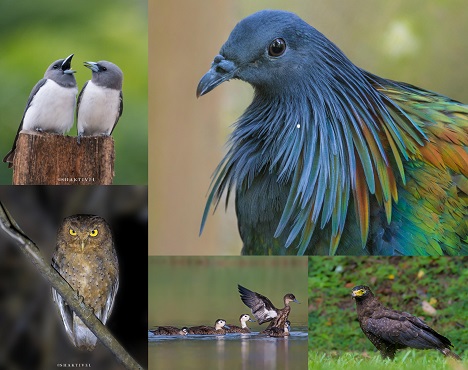
- ⏱️ Duration: 8 Days / 7 Nights
- 📍 Base: Port Blair and Hut Bay
- 🎯 Target: Nicobar Pigeon, Beach Thick-Knee, 20 Endemics, Residents & Migrants
- 🗓️ Upcoming Tours: Little Andaman Birding Group Tour Dates (2026-2027).
8-Day South & Little Andaman Specialty Birding
For birdwatchers seeking a complete sweep of the archipelago’s regional specialties, this 8-day itinerary extends south to Little Andaman (Hut Bay). The maritime transit across the Duncan Passage provides pelagic seabird opportunities, while Little Andaman’s pristine coastal scrub and primary forests harbor two highly coveted targets: the Nicobar Pigeon and Beach Thick-knee.
After securing range-restricted specialties in Little Andaman, the expedition returns to South Andaman to mop up remaining forest endemics and nocturnal owls.
Key Target Species: Nicobar Pigeon (Caloenas nicobarica), Beach Thick-knee (Esacus magnirostris), Andaman Wood-Pigeon (Columba palumboides), Andaman Woodpecker (Dryocopus hodgei), Andaman Cuckoo-Dove (Macropygia rufipennis), Andaman Masked Owl (Tyto deroepstorffi), Andaman Scops-Owl (Otus balli), White-breasted Woodswallow (Artamus leucorynchus).
eBird Reports: See full species list and sighting data from our 2025-2026 Little Andaman Birding Trip Reports.
Little Andaman Birding Guide: G. Shaktivel, Prodip Sarder, Jabili Rao
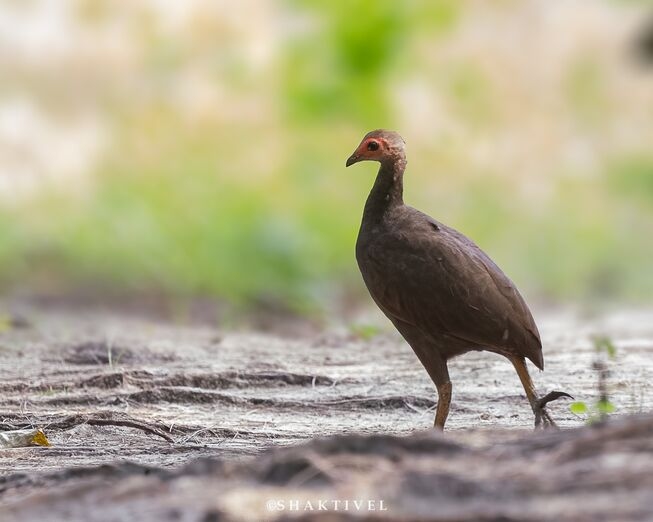
- ⏱️ Duration: 13 Days / 12 Nights
- 📍 Base: Port Blair & Campbell Bay
- 🎯 Target: 27 Endemics, Residents & Migrants
- 🗓️ Upcoming Tours: Nicobar Birding Group Tours (2026-2027
13-Day Great Nicobar & Andaman Avian Frontier Expedition
The ultimate Indian birding expedition. This 13-day itinerary traverses the entire island chain, reaching Great Nicobar Island—India’s southernmost frontier. Accessing Great Nicobar unlocks 7 localized Nicobar endemic species found nowhere else on earth, alongside the full suite of Andaman endemics.
From tracking the mound-building Nicobar Megapode along coastal sanctuaries to spotting the majestic Nicobar Serpent-Eagle and Nicobar Scops Owl, this itinerary represents Asia’s premier island birding adventure.
Key Target Species: Nicobar Megapode (Megapodius nicobariensis), Nicobar Scops-Owl (Otus alfredi), Nicobar Serpent-Eagle (Spilornis klossi), Nicobar Parakeet (Psittacula caniceps), Nicobar Hooded Pitta (Pitta abbotti), Nicobar Imperial Pigeon (Ducula nicobarica), Nicobar Jungle Flycatcher (Cyornis nicobaricus)
eBird Reports: See full species list and sighting data from our 2025-2026 Nicobar Birding Trip Reports
Nicobar Birding Guide: G. Shaktivel, Prodip Sarder, Aldrich Franklin .
UPDATE : Open for Foreign Nationals.
DAY tours:Andaman Islands (CHIDIYATAPU & HAVELOCK)
Short on time but eager to cross endemic lifers off your list? You do not need a multi-week expedition to experience the incredible avian diversity of the Andamans. Based out of Port Blair (South Andaman) or the tropical forests of Havelock Island (Swaraj Dweep), our flexible single-day and night excursions are designed to fit seamlessly into any travel itinerary.
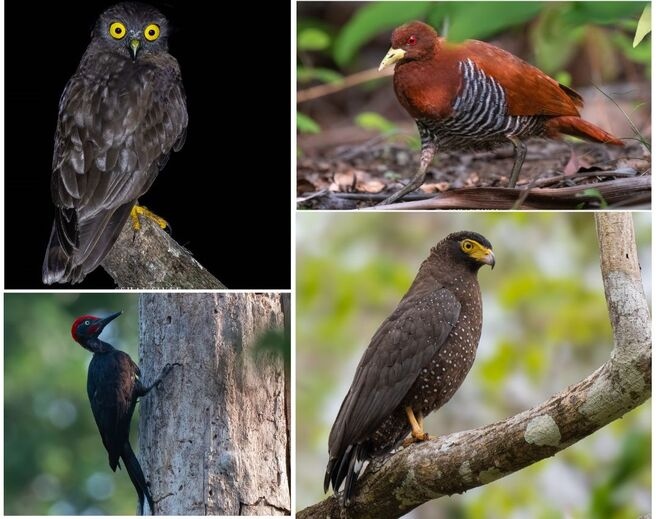
- ⏱️ Duration: Half-Day (4 Hrs) / Full-Day (8 Hrs)
- 📍Base: Port Blair & Havelock Island (Swaraj Dweep)
- 🎯Target: 8–15 Endemic Species
Andaman Day Trips: Half-Day & Full-Day Birding Excursions
Short on time or traveling with family? You do not need a multi-week expedition to cross endemic lifers off your world list. Based out of Port Blair (South Andaman) or Havelock Island (Swaraj Dweep), our flexible single-day and half-day birdwalks fit seamlessly into any holiday schedule, cruise stopover, or family vacation.
Key Target Species: Andaman Woodpecker (Dryocopus hodgei), Andaman Treepie (Dendrocitta bayleyii), Andaman Coucal (Centropus andamanensis), Andaman Serpent-Eagle (Spilornis elgini), Vernal Hanging-Parrot (Loriculus vernalis), Andaman Shama (Copsychus albiventris), White-headed Starling (Sturnia erythropygia)
Guide on Day Tours: Prodip Sarder, Jabili Rao, and Aldrich Franklin
Other India Destinations : Perfect for combining with Andaman Birding
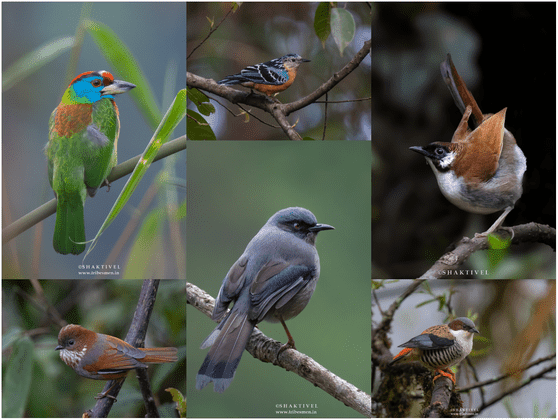
- ⏱️ Duration: 25 Days / 24 Nights
- 📍 Regions:Eastern Himalayas & Assam Plains
- 🎯Yield Target:400+ Avian Species & Rare Endemics
- ⛰️ Key Reserves:Eaglenest, Mishmi Hills, Maguri & Kaziranga.
25-Day North-East India Mega Expedition
Traversing two globally recognized Endemic Bird Areas (EBAs)—the Eastern Himalayas and the Assam Plains—this mega expedition explores Asia’s premier birding frontier. From high-altitude bamboo thickets to lowland alluvial grasslands and tropical rainforests, this comprehensive itinerary is engineered for serious twitchers targeting regional endemics, rare eastern specialties, and high-altitude skulkers.
Key Target Species: Bugun Liocichla (Liocichla bugunorum), Ward’s Trogon (Harpactes wardi), Blyth’s Tragopan (Tragopan blythii), Mishmi Wren-Babbler (Spelaeornis badingani), Swamp Grass-Babbler (Laticilla celerotis), Black-breasted Parrotbill (Paradoxornis flavirostris), Austen’s Brown Hornbill (Anorrhinus austeni)
eBird Reports: See full species list and sighting data from our April 2026 North-East India Report
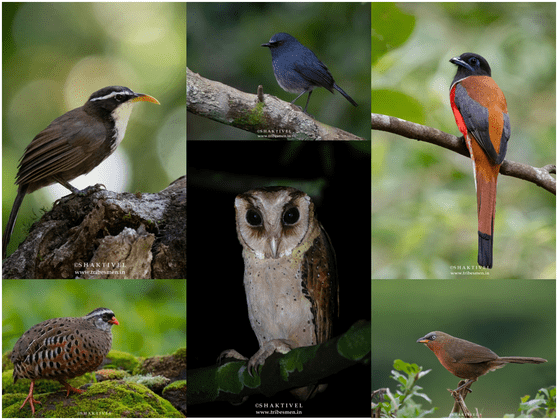
- ⏱️ Duration: 11 Days / 10 Nights
- 📍 Regions: Western Ghats & Nilgiri Biosphere
- 🎯Yield Target: 35+ Regional & Nilgiri Endemics
11-Day South India & Western Ghats Endemic Expedition
A focused exploration of the Western Ghats—a UNESCO World Biodiversity Hotspot and isolated evolutionary refuge. This 11-day itinerary targets the endemic bird species restricted to the high-elevation shola-grassland mosaics and evergreen rainforests of South India and neighboring Sri Lanka, paired with exceptional mammal encounters.
Key Target Species: Nilgiri Laughingthrush (Montecincla cachinnans), White-bellied Sholakili (Sholicola albiventris), Black-and-orange Flycatcher (Ficedula nigrorufa), Nilgiri Flycatcher (Eumyias albicaudatus), Malabar Grey Hornbill (Ocyceros griseus), Broad-tailed Grassbird (Schoenicola catentatus), Sri Lanka Frogmouth (Batrachostomus moniliger)
Frequently Asked Questions
Can foreign tourists visit Great Nicobar for birdwatching?
Yes, foreign nationals can visit designated areas in Great Nicobar (such as Campbell Bay) on organized birdwatching expeditions. However, advance permits and security clearances are required. Indigenous tribal reserves remain strictly off-limits to all tourists.
Who are the best birding guides for Little Andaman?
The top birding guides specializing in Little Andaman field trips are senior naturalists G. Shaktivel (lead guide at Tribesmen Expeditions), Prodip Sarder, and Jabili Rao. They possess years of local field experience tracking range-restricted species such as the Nicobar Pigeon, Beach Thick-knee, and Andaman nocturnal endemics.
When is the best time to visit Little Andaman for birdwatching?
The optimal window for Little Andaman is October to mid-February. During these months, maritime weather across the Duncan Passage is calm, enabling smooth boat transits.
From late February onwards, sighting target species becomes significantly more challenging: the Beach Thick-knee enters its breeding season and grows elusive, while Nicobar Pigeons move deeper into primary rainforest canopies seeking cooler microclimates.
When is the peak birding season in the Andaman Islands?
The overall birding season spans from October to April, with the absolute peak occurring during January and February when forest activity is at its highest, weather is dry, and migratory species are fully present..
How difficult is an Andaman birding tour, and can senior travelers (above 60) visit?
Yes, birdwatchers above 60 frequently join island expeditions! Physical demands vary by island segment:
- South Andaman (Easy): Gentle walking along paved forest tracks and well-graded trails with short vehicle transfers. Highly accessible for seniors.
- Little Andaman (Moderate): Involves moderate walking across varied terrain, including coastal sandy stretches and forest paths.
- Great Nicobar (Moderate to Challenging): Involves long inter-island ferry transits, basic field infrastructure, and humid forest trekking.